
Jagannath Puri is not just a pilgrimage site — ancient scriptures describe it as a place personally chosen by the Lord.
Jagannath Puri is renowned as one of India’s holiest sites. We admire the grand temple, the ocean beside it, and the magnificent Ratha Yatra that attracts millions annually. But why did the Lord choose this place? Why not another ancient city, riverbank, or mountain shrine? Hidden in old scriptures is a subtle story that answers this question—not with miracles alone, but with a profound idea of why the divine sometimes chooses to remain close to people.
A Name Spoken Almost Like a Secret
Sūta did not proclaim the place loudly. He spoke its name with reverence, as if revealing something hidden. He told them of a land known as Purushottama Kshetra. Not a place famed for wealth. Not a realm of powerful kings. But a land cherished by the Lord Himself. He said that even remembering this place with faith could purify the mind. Such was its quiet spiritual force. That place, we now know, is Puri.
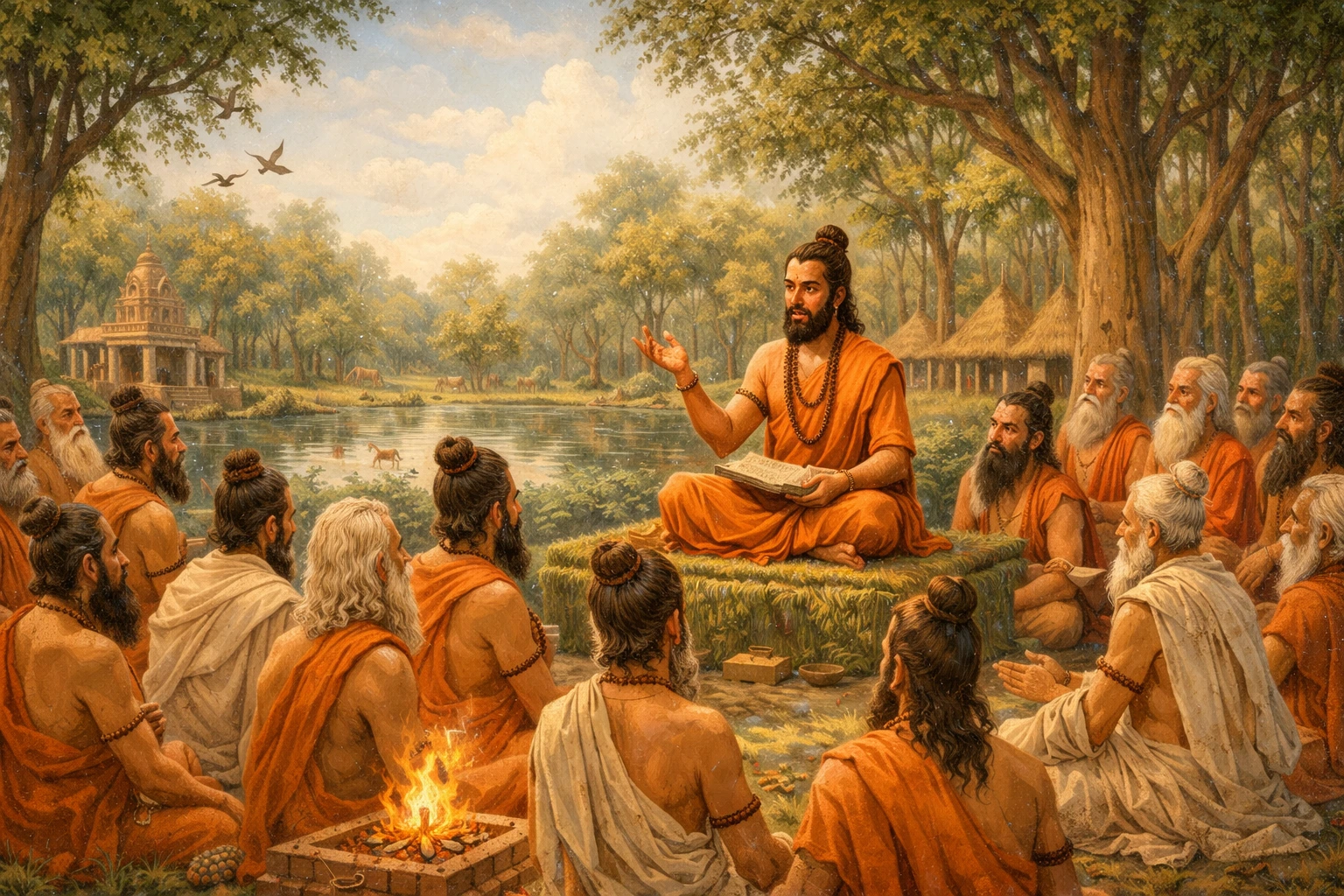
The sages in Naimisharanya were not merely curious. They had devoted years to rituals, scripture study, and journeys through sacred lands. Yet, a question lingered. Among the many holy sites — rivers, mountains, temples — was there one where the Lord’s presence felt particularly near? They turned to Sūta, the storyteller with memories predating kingdoms: “Is there a place where devotion flourishes swiftly, where the Lord feels close?” The forest hushed as he readied to respond.
A Name Spoken Almost Like a Secret
Sūta did not proclaim the place loudly. He spoke its name with reverence, as if revealing something hidden. He told them of a land known as Purushottama Kshetra. Not a place famed for wealth. Not a realm of powerful kings. But a land cherished by the Lord Himself. He said that even remembering this place with faith could purify the mind. Such was its quiet spiritual force. That place, we now know, is Puri.
A Land That Was Said to Outlive Time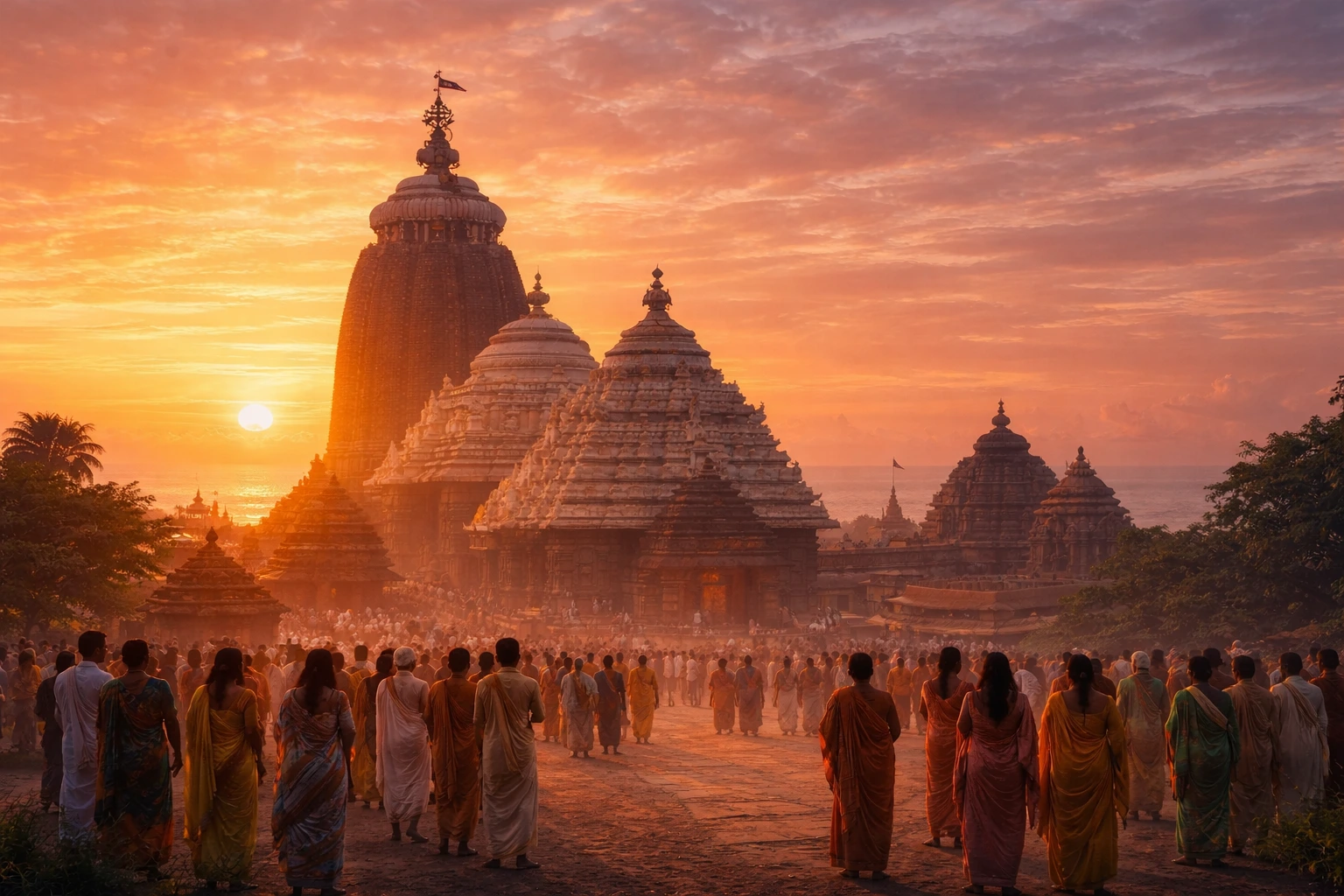
SssuSūta Goswami then described something that likely surprised the sages. He said this land was unlike other pilgrimage sites that rise and fall with time. It was believed to remain sacred even as the world changes. As if the place had been set aside long ago — protected, preserved, waiting. To the sages in that forest, this meant one thing: this was not just a holy town. It was a place the Lord intended to stay.
The Form That Made the Sages Pause
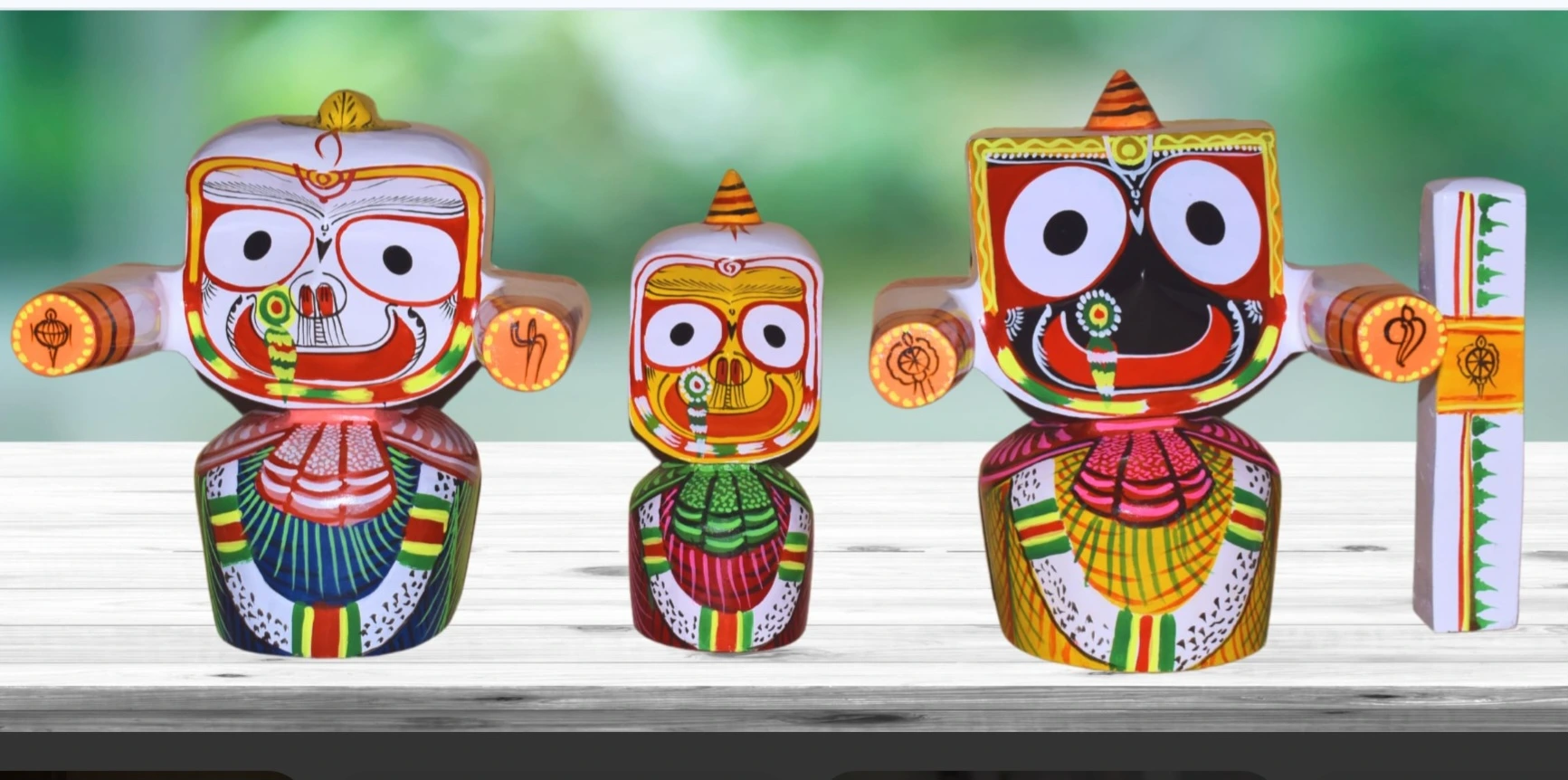
Then came the most unexpected part of the narration. Sūta spoke of the Lord appearing there not in shining stone, not in polished metal, but in a wooden form. A form simple, unusual, almost unfinished to the human eye. For a moment, the sages wondered — why would the Lord choose such a form? But Sūta hinted that perhaps this was the very point. A form that felt closer to people. A form that did not intimidate, but invited. A form that made the divine feel present, not distant.
A Story Meant to Travel Beyond Temples
Sūta then reminded them that this story itself was sacred. It was not meant to remain only in scriptures or in forests of sages. It was meant to be told, heard, and remembered wherever devotion lived. Because the Lord who chose this place was also the Lord who steps out among people — in festivals, in songs, in the movement of the chariot, and in the small ways faith is carried into everyday life.
A Tradition That Did Not Stay in One Place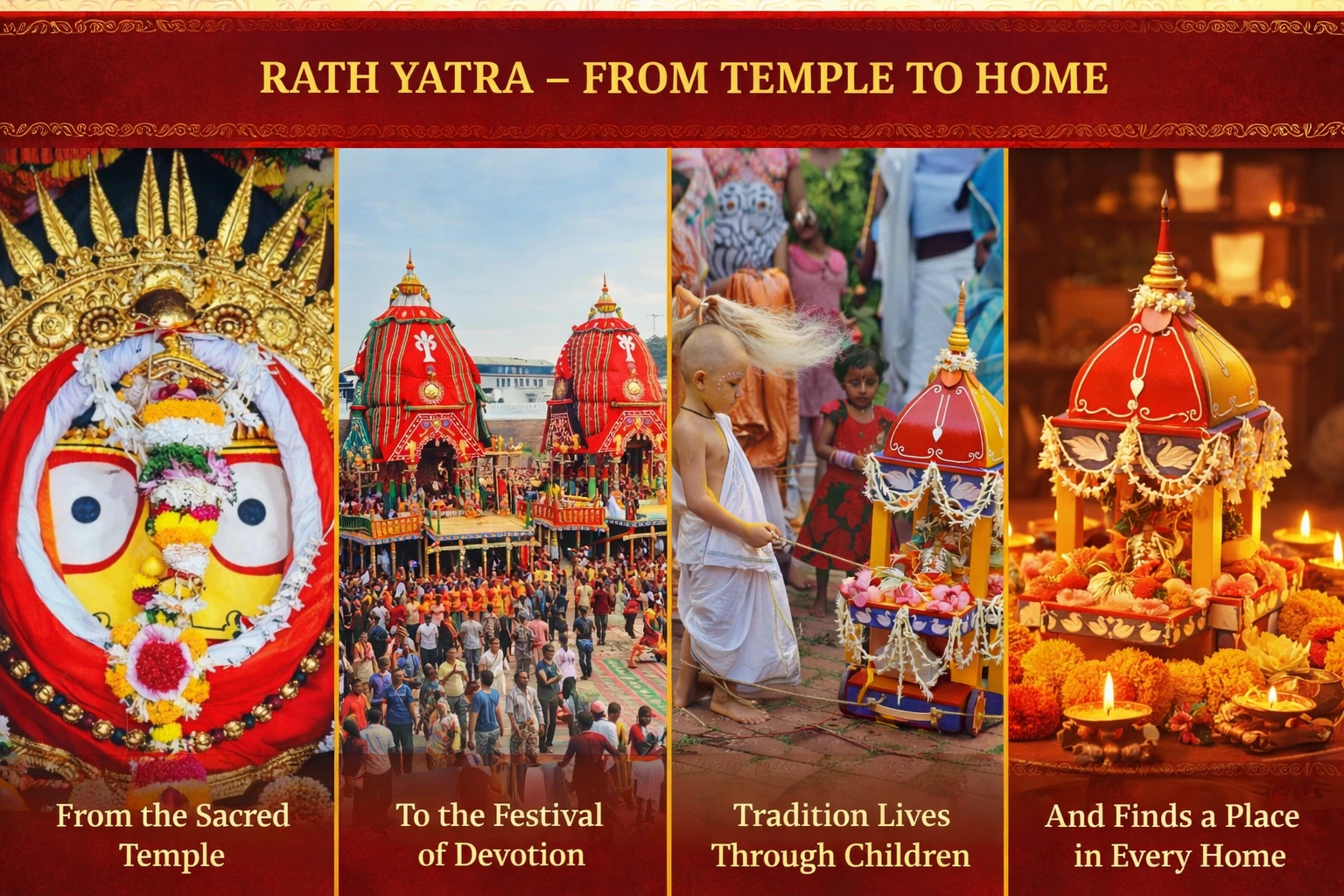
Over time, the story moved beyond that forest. It reached pilgrims, families, and homes. Perhaps that is why the tradition of Jagannath never feels confined to a single temple. It travels — through festivals, stories, and memories. Just as the Lord Himself does.
Perhaps this is why Jagannath devotion feels different from many other traditions. The Lord here is not distant or hidden — He steps out among people, travels with them, and becomes part of their everyday life. The old narration reminds us that sacred places are not only made by temples or rituals. They are created where devotion continues to live — in festivals, in stories, and in the quiet ways families remember the Lord across generations. And maybe that is the real reason Puri was chosen… so that the divine would never feel far away.
The story of why lord Jagannath chose Puri is not only a tale of past but a tradition still alive today. from the sacred Nilachala to homes acrosss the world devotees keep this connection through prayers, festivals and family rituals. Many parents now introduce children to Jagannath culture through stories, small chariots, and symbolic celebration at home, keeping the spirit of Rathyatra alive beyond the temple streets. in this way , devotion to lord jagannath continues to move forword - from puri to every home , and from generaion to the next .